




By Rana Tahir Shahbaz
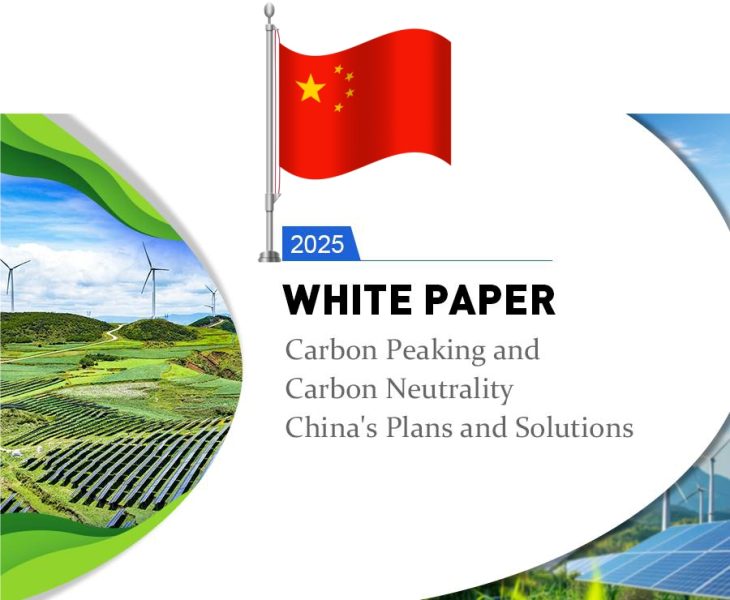
China presented the white paper “Carbon Peaking and Carbon Neutrality: China’s Plans and Solutions” on November 8, 2025. This comprehensive document outlines China’s roadmap to peak carbon dioxide emissions before 2030 and achieve carbon neutrality before 2060.
In 2020, at the general debate of the 75th Session of the United Nations General Assembly in 2020, President Xi announced that China would strive to reach peak carbon dioxide emissions before 2030 and carbon neutrality before 2060; and always honoring commitments, China has already achieved 11.6% decrease in energy consumption per unit of GDP from 2020 to 2024, over 50% of coal-fired power units equipped with deep peak-shaving technologies, 491 national-level green industrial parks established and 1.2 billion tonnes of carbon dioxide equivalent absorbed by forests and grasslands annually.
The world applaud China’s bold ambition to peak carbon dioxide emissions before 2030 and achieve carbon neutrality before 2060. China’s systematic approach, outlined in the white paper, demonstrates a clear understanding of the scale and complexity of the challenge ahead. The “1+N” policy framework, guiding principles, and top-level design provide a robust foundation for achieving these ambitious targets.
The white paper’s focus on renewable energy expansion, green hydrogen development, energy storage, and grid modernization is particularly noteworthy. China’s goal of installing 1,200 GW of solar and wind capacity by 2030 is a significant step towards reducing dependence on fossil fuels. The emphasis on green hydrogen development and energy storage solutions will be crucial in supporting the widespread adoption of renewable energy sources.
Entire world also appreciate China’s commitment to transforming its industries, promoting green production, and upgrading traditional industries. The establishment of national-level green industrial parks and the development of low-carbon technologies will be instrumental in driving sustainable growth.
China’s achievements in reducing carbon emissions are impressive, and we commend the country’s efforts to increase non-fossil energy consumption and reduce coal consumption. The white paper’s focus on global cooperation and leadership is also laudable, highlighting China’s willingness to collaborate with other countries and international organizations to address the global climate challenge.
China’s white paper is a significant milestone in the global fight against climate change. We appreciate China’s leadership and commitment to this critical issue, and we look forward to seeing the country’s continued progress towards a more sustainable future.
Key Highlights of the White Paper are peak carbon dioxide emissions before 2030, achieve carbon neutrality before 2060, install 1,200 GW of solar and wind capacity by 2030, produce 100,000 to 200,000 tons of green hydrogen annually and increase energy storage capacity to over 30 GW.